E’li’le (Salmonberry) - Lora Boome
Lora Boome shares the cultural and environmental importance of E’li’le and her work revitalizing traditional foods for the Lummi people.
- Seed sovereignty
- Oral history
Indigenous first foods are important cultural and environmental health indicators. A healthy food system moves beyond wheat monocultures to protect these foods
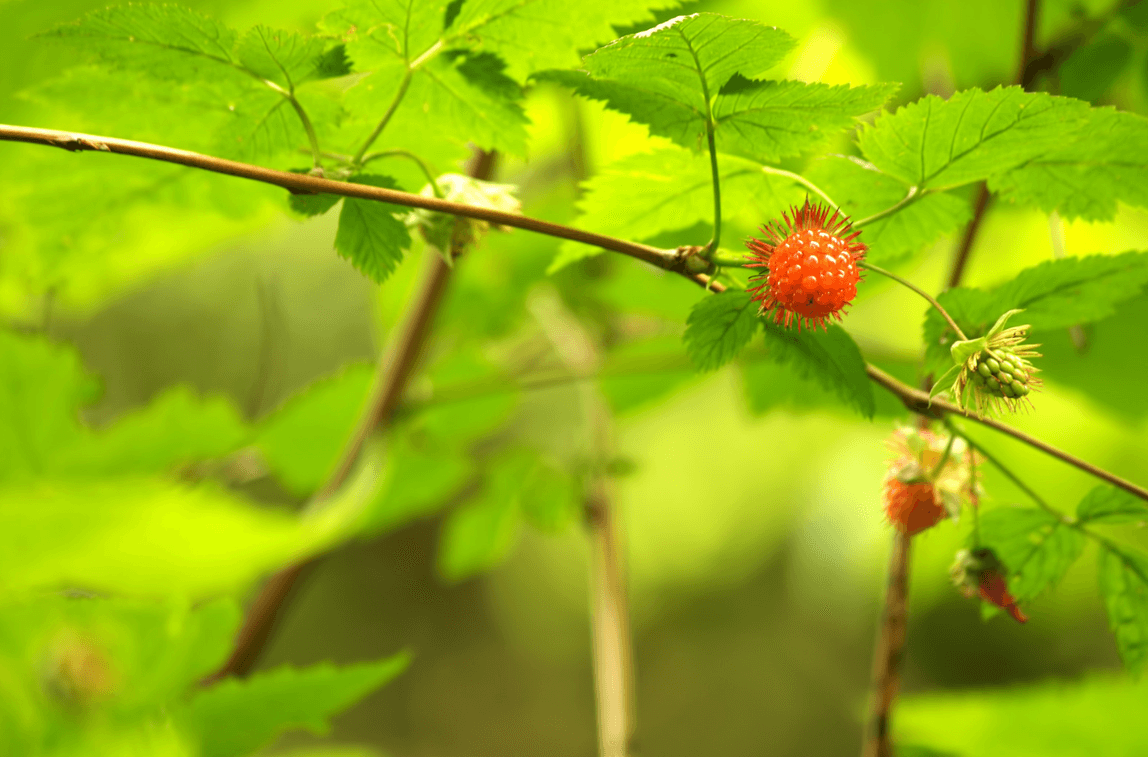
Lora Boome is the Traditional Plants and Foods Coordinator at Northwest Indian College. Lora is a member of the Lummi tribe, and spoke to us about E’li’le - Salmonberry. Salmonberry was driven out of the diets of Lora and her ancestors, by the introduction of commodity crops like wheat and U.S. government supplied food boxes. Lora spoke to us of her work in revitalizing traditional foods for the Lummi people, and of her connection with E’li’le in particular.
Listen to the story
Lora explains the personal and environmental impacts of salmonberry
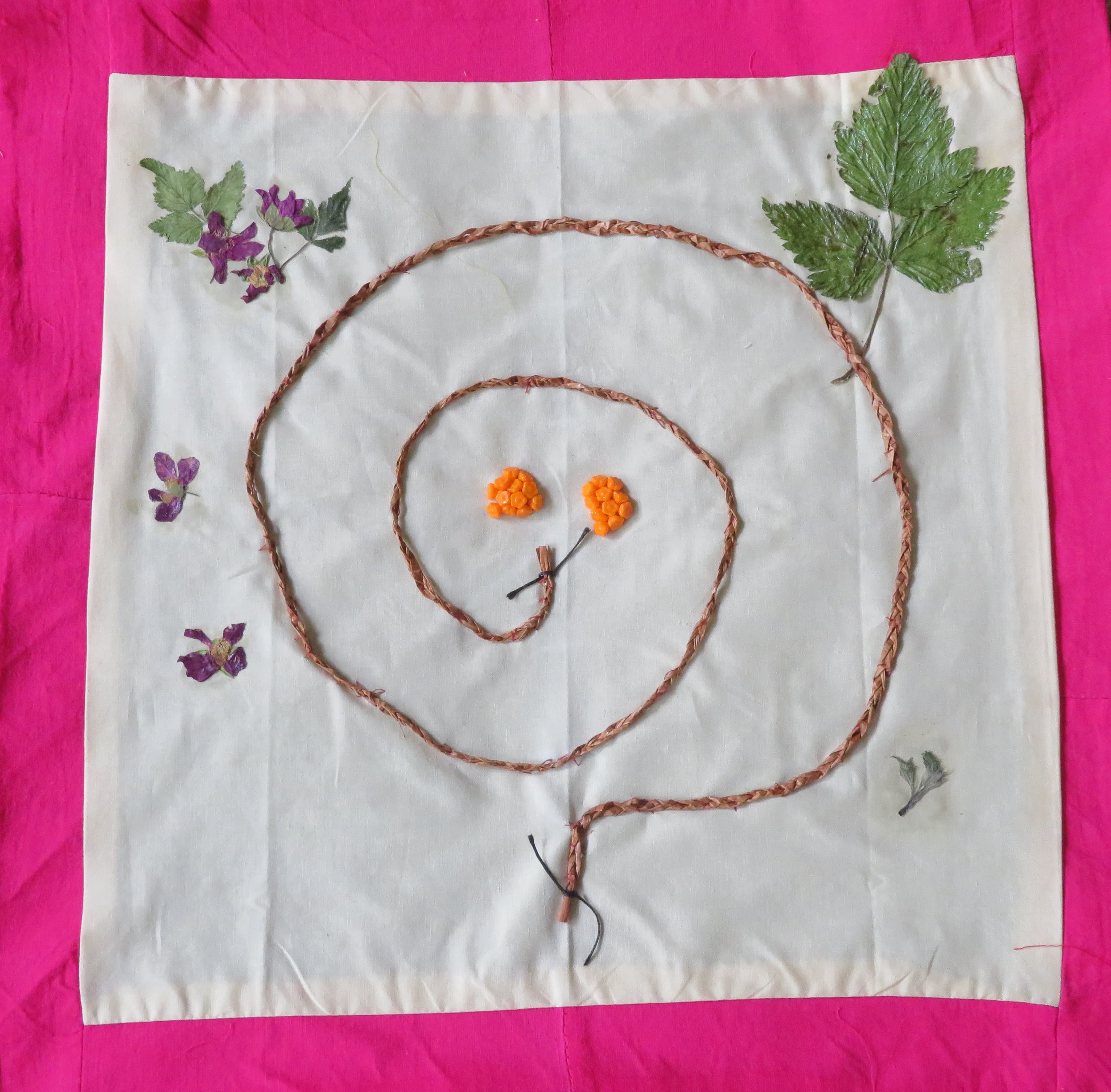
Lora braided the central spiral from cedar harvested and willed to her by her grandmother. This special gift is surrounded by sprouts (also called bear candy), the iconic leaves (which are identified by their butterfly shape), and the brilliant pink flowers of the Salmonberry plant. Fatema and Simren harvested these from the coast of Washington, ensuring to show reciprocity to the plant by providing water to the plant. They then sewed the bright orange berry onto the square with beads.