Washington grain and food-system context
Sixteen quilted seedbank squares artistically archive living memories and agricultural wisdoms of indigenous, immigrant, and allied heritage food protectors in Washington state. Each quilt square contains a viable seed that can be replanted, as well as an art piece contributed by an artist with close relationship to the seeds preserved in this bank. Our stories, curated together, offer possibility for a more nourishing, climate resilient, socially just, local food system.
4th
Washington is the 4th largest producer of wheat in the U.S.
90%
of this wheat is exported
1/10
of Washingtonians face food insecurity
All the while, climate change strains our local soils and waters, and global supply chains are breaking under economic pressures. The stories presented here demonstrate how and why we must redistribute resources towards fortifying local, resilient food ecosystems.
“To challenge the industrial grain complex, we must reclaim who controls the narrative of our food system”
Camas - Jennifer Willup and Todd Mitchell
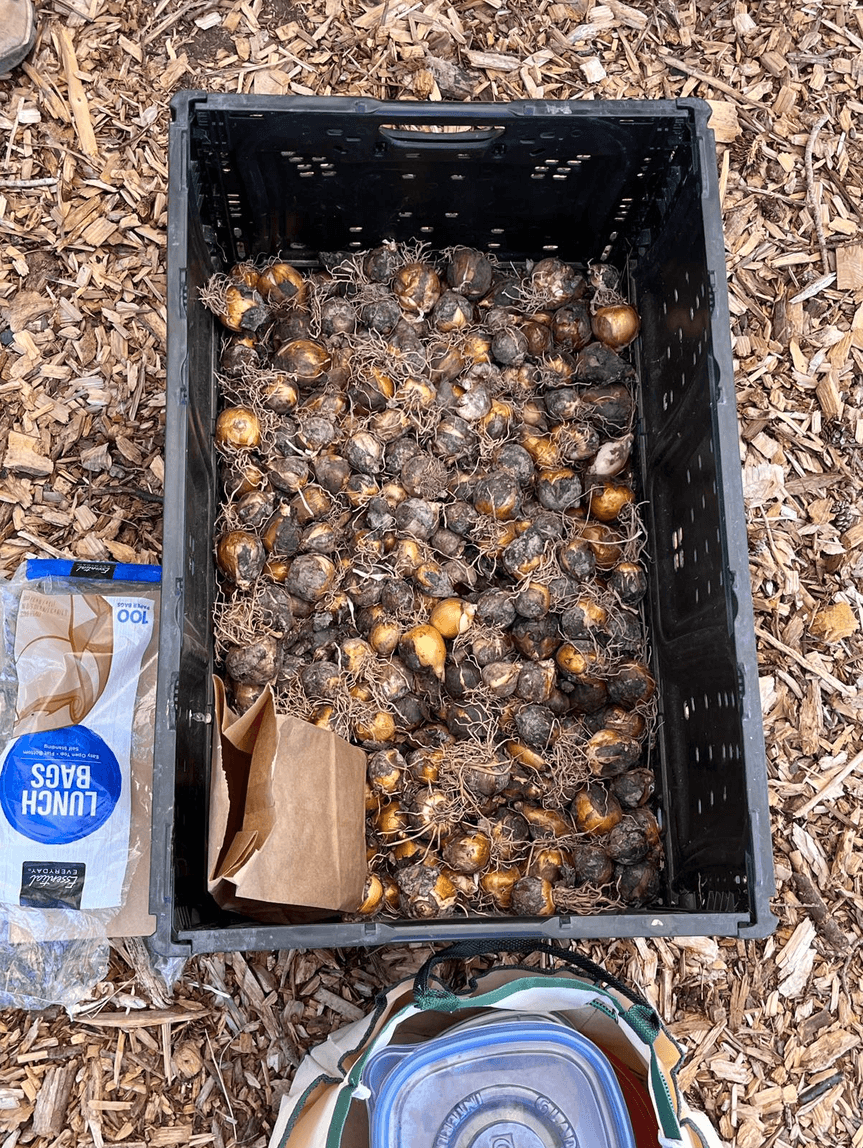
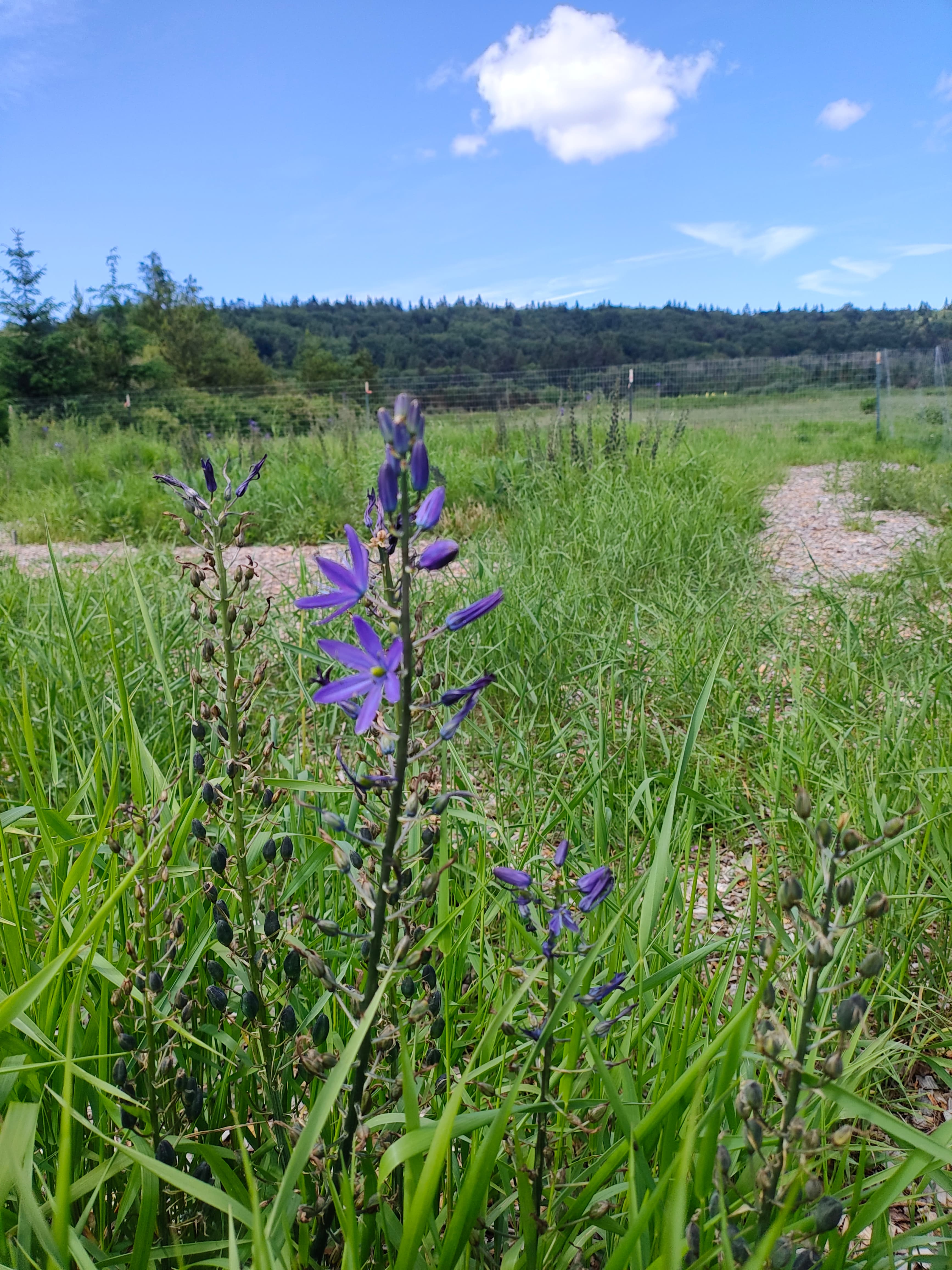
Our storytellers, Jennifer Willup and Todd Mitchell, are members of Swinomish Nation. They are stewards of the Camas plant. Camas was colonized out of the diets and lands of the Swinomish people. Jennifer and Todd are reclaiming their indigenous diets by holding planting/harvesting days of Camas on the Swinomish Nation’s agricultural land. They are hosting feasts and integrating the Camas bulbs into the cuisine of their community, by teaching workshops and creating easy-to-consume products like Camas flour.
Jennifer Willup · Todd Mitchell
Todd and Jennifer speak on colonization's impact on their ancestral crops
0:00 / 0:00
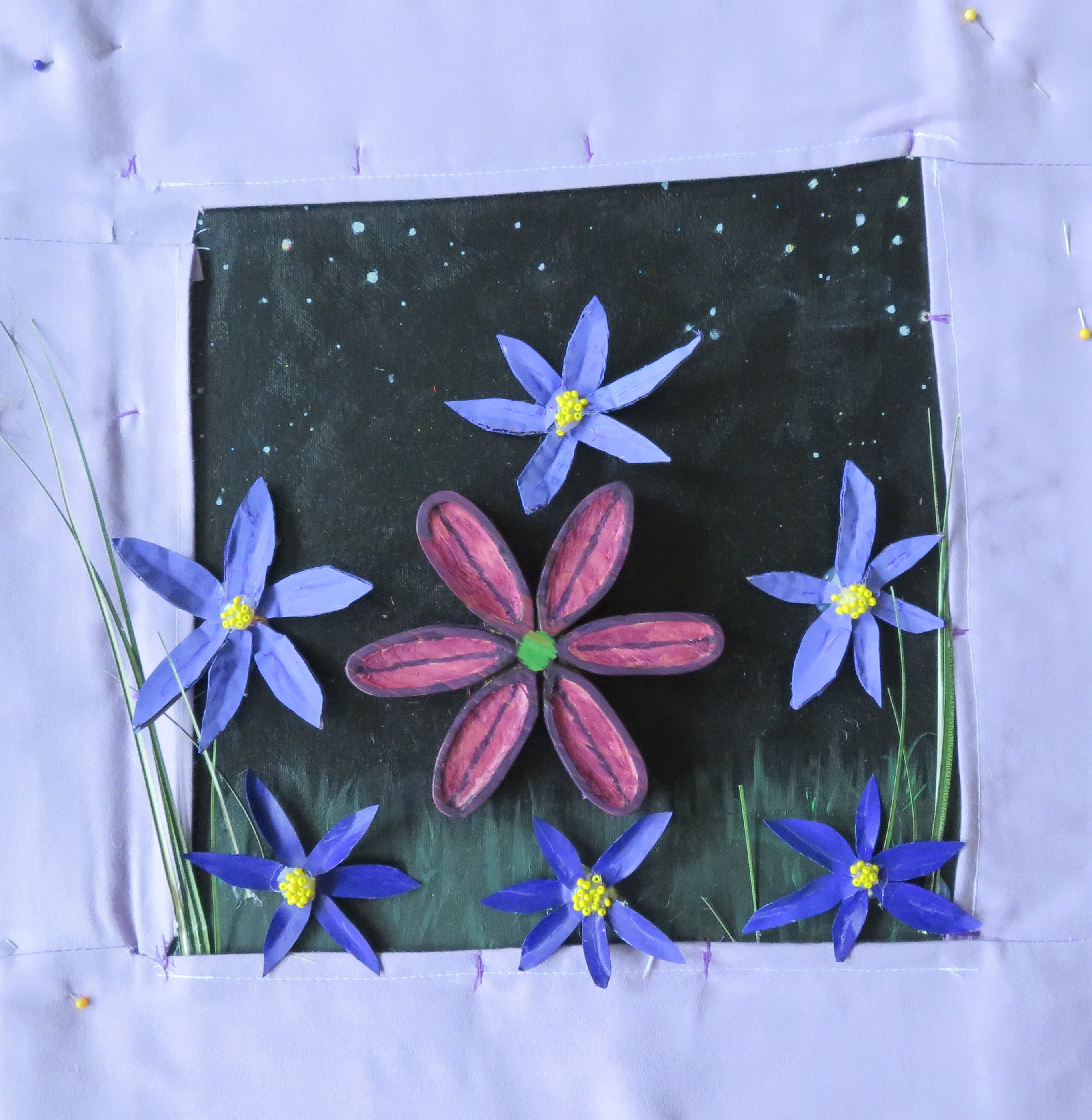
Todd comes from a lineage of canoe carvers. He carved the center Camas flower from the cedar wood he uses for canoes. Jennifer contributes her multi-media art skills through the painted stars and paper flowers.
“A healthy food system requires building relationships with the entire ecosystem”
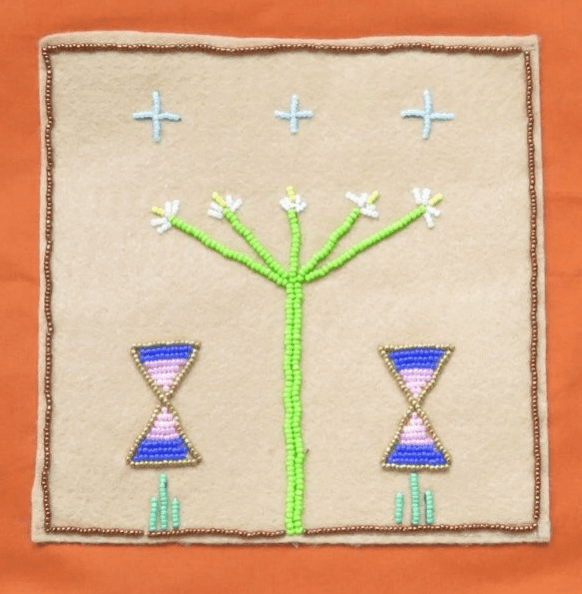
Cāwíitx - Jeanine Gordon
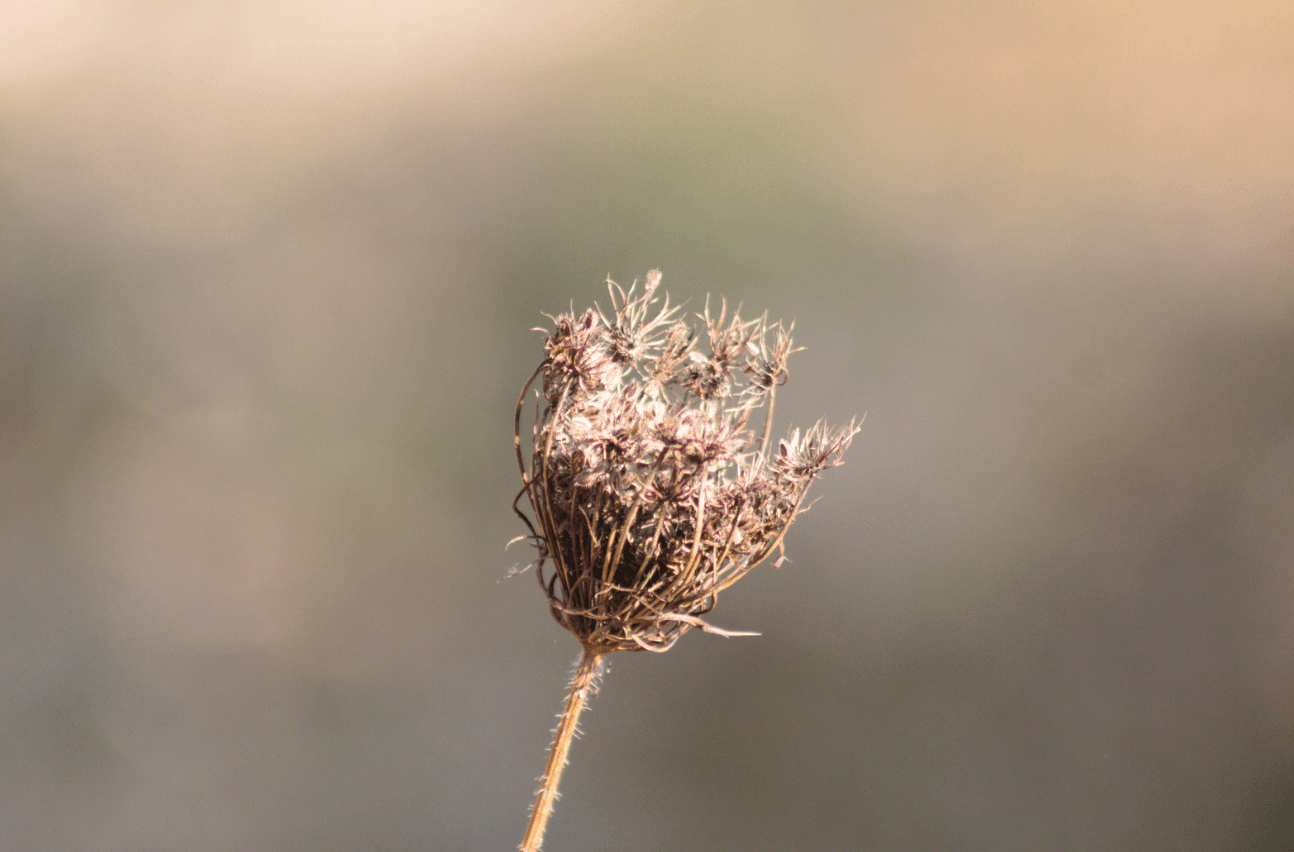
Jeanine Gordon is Cayuse, and a registered member of the Confederated Tribes of Umatilla Indian Reservation. She is a storyteller, basket weaver, and a traditional beadwork artist. She contributes this beaded depiction of Cāwíitx, wild carrot. Next to the wild carrot, Jeanine symbolizes women, who are the traditional gatherers of Cāwíitx. Above are stars, and below are the grasses which represent the Palouse natural ecosystem.
Jeanine Gordon
Jeanine speaks on Cāwíitx's importance and her people's first foods
0:00 / 0:00
Jeanine’s oral story talks about the cyclical rounds of seasons, and how we must pace our harvests to the seasons and tend to waters and lands so our foods have a good home to return to.
“If ancestral values led the exchange, care and equity would be inherent to our food system”
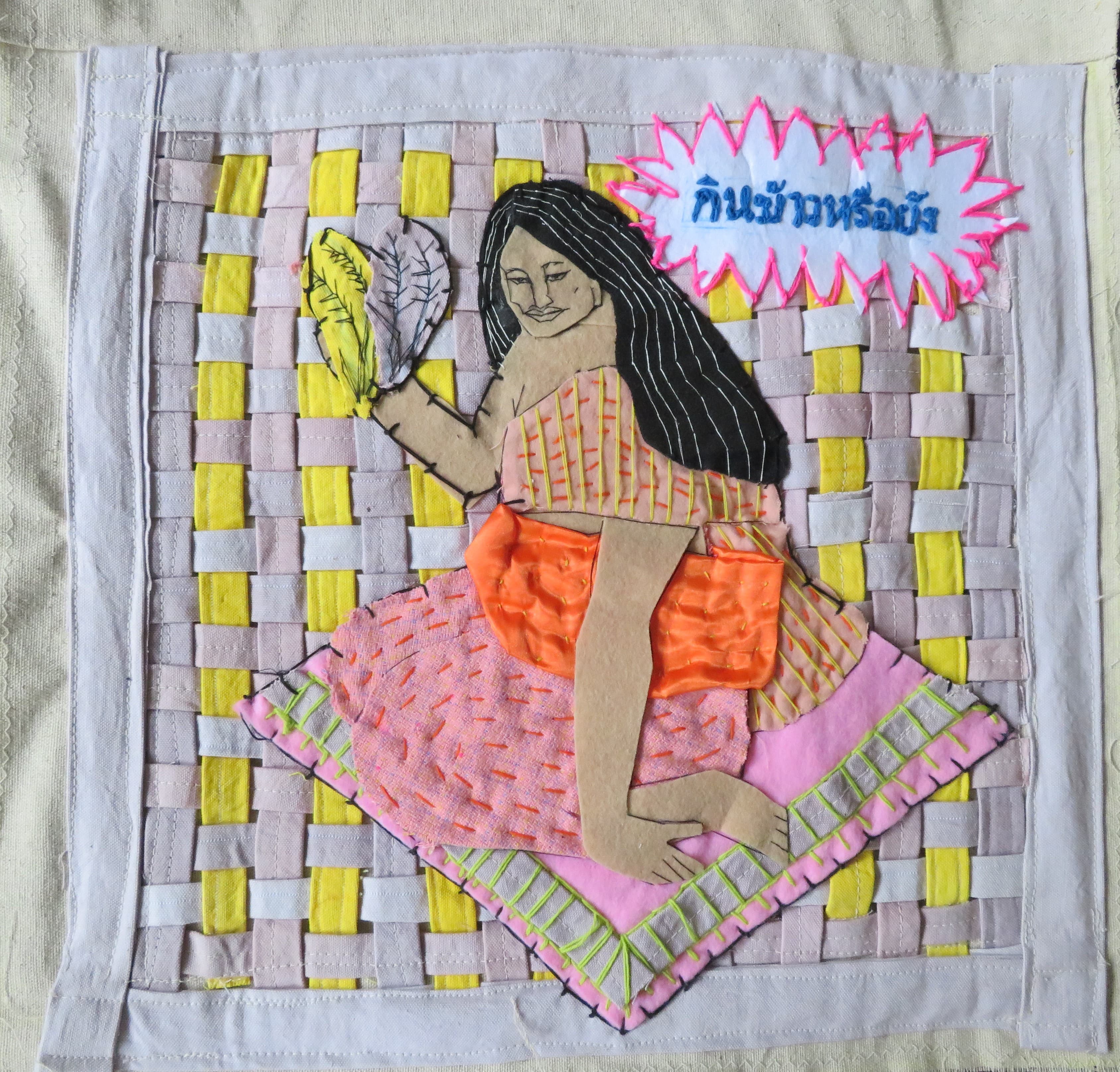
Purple Riceberry - Fon Spaulding and Nina Vichaypai
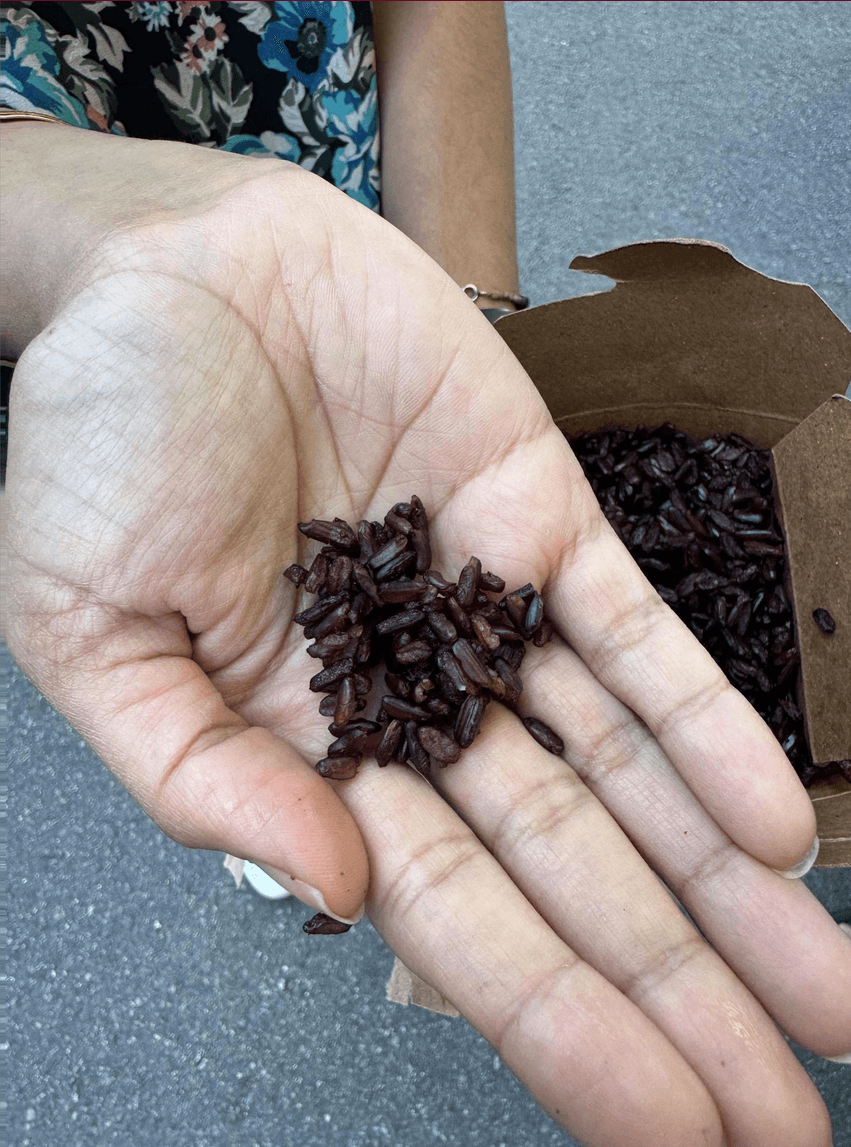
Fon Spaulding, owner of Kati Vegan Thai, tells the story of her relationship to Purple Riceberry. She stresses the importance of equitable supply chain models that support small, traditional farms in her home country, Thailand. While Fon imports the cultural ingredients necessary in her restaurant like purple riceberry, she also sources as many ingredients as she can from local, sustainable farms in the Pacific Northwest.
Nina Vichaypai
Artist Nina explains care in her community and its connection to the multiple varieties of rice served in her family's restaurant
0:00 / 0:00
Thai-American artist, Nina Vichaypai further illustrates the importance of Rice in Thai culture. She embroidered "Gin Khao Rue Yang", which translates to "Have you eaten Rice Yet?", in the top right corner of this quilt square. She explained to us that this phrase is commonly used as a greeting. If someone says no, the community will offer them food. Fon and Nina represent how rooting in culture when feeding others inherently embodies care. Building these practices into our supply chain while importing our diverse ingredients is a way to center equality in our cuisines.
Nina Vichaypai
Nina explains how she made her quilt square
0:00 / 0:00
“Curiosity and celebration of diversity allows us to notice and respond to change as a collective, interconnected, community”
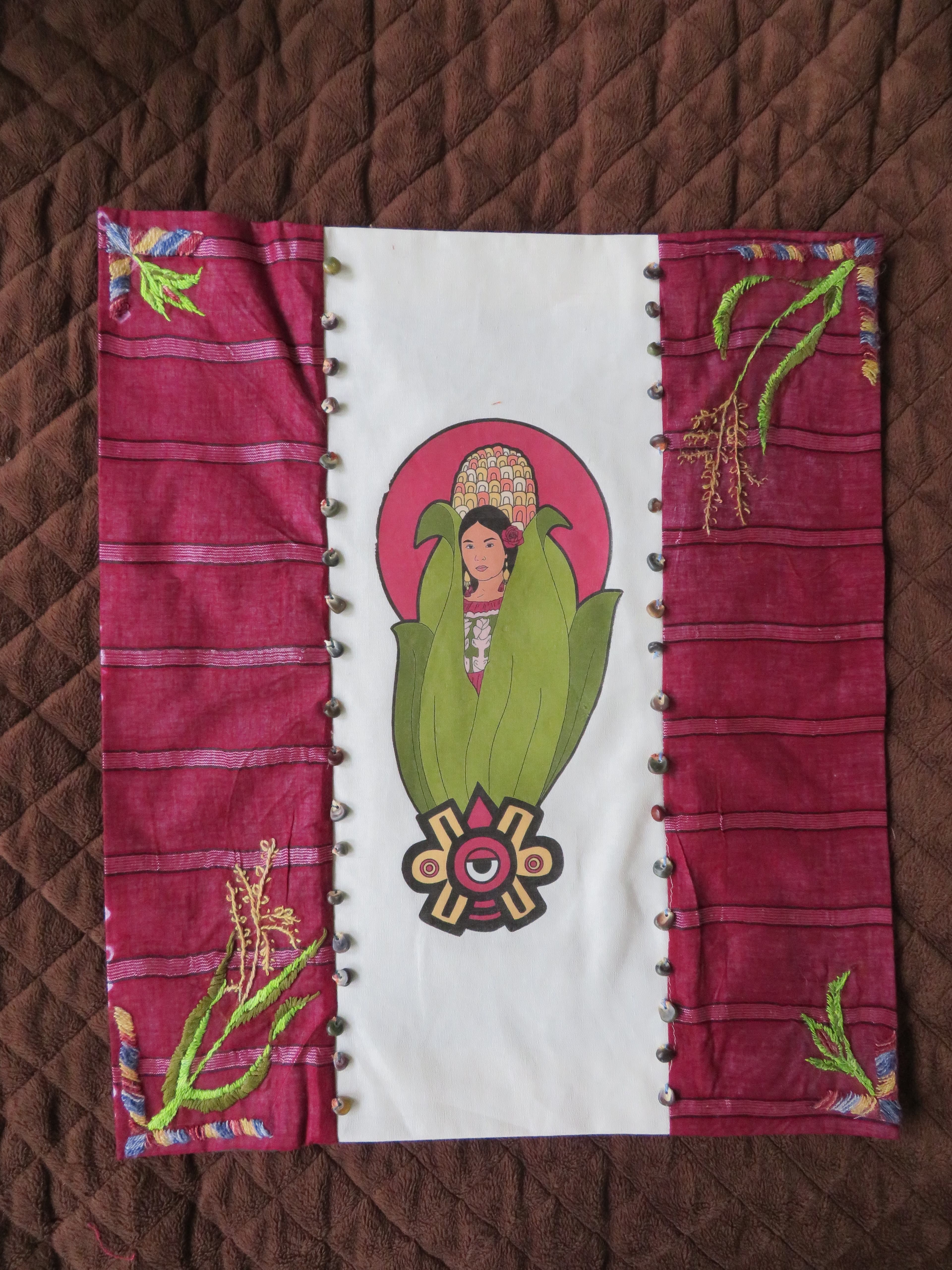
Pacific Blue Maíze and Oaxcan Green Maíze - Perla Ruíz, Jake Prendez, and Alena Prendez
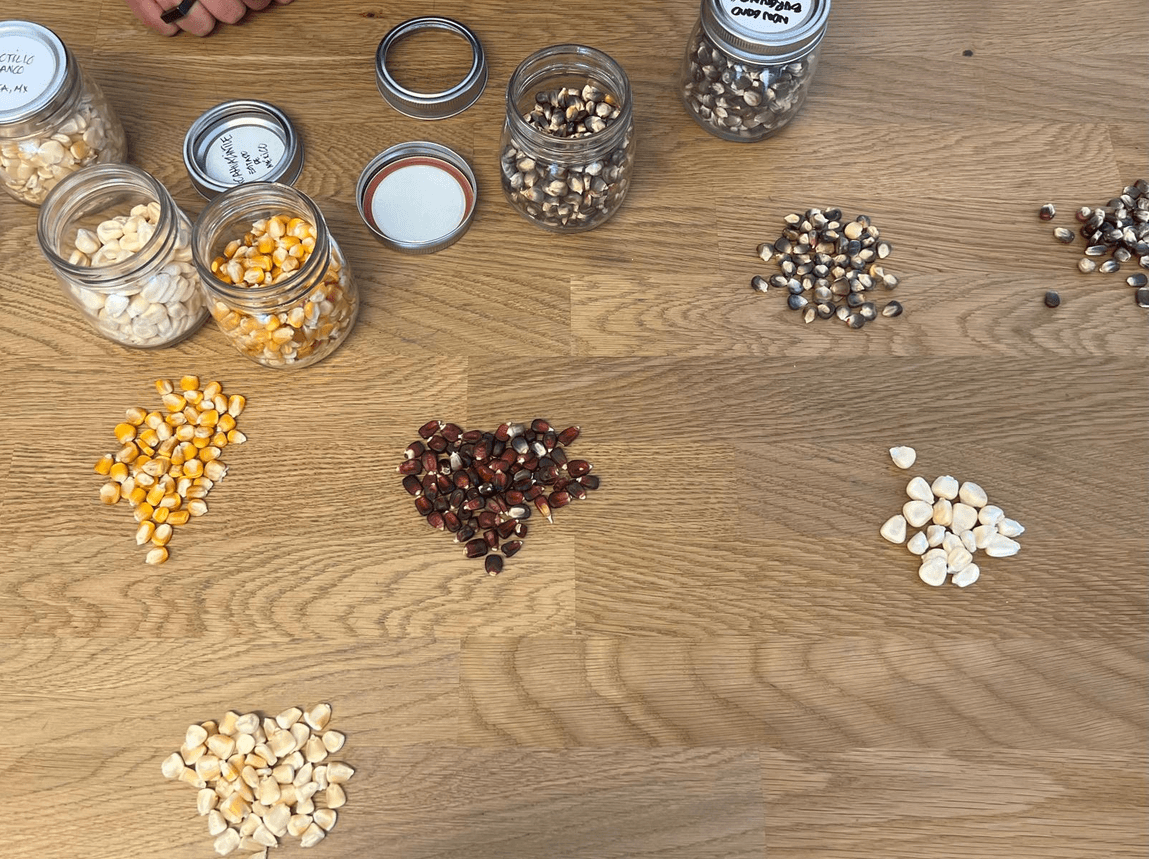
Perla Ruíz started Milpa Masa Company in 2021, to bring her traditional nixtamalized tortillas to Washington. Perla sources heritage maize from local growers in Washington, Native American growers across the United States, value-aligned producers in Illinois, and sometimes small producers in Mexico.
Perla Ruíz
Perla speaks about how processing maize the traditional way allows her to notice how climate change is impacting cuisine. She also explains how important accessing diverse corn has been to her customers.
0:00 / 0:00
In 2026 Milpa Masa had to close business due to high tariffs and economic barriers to equipment access. When the community Perla had built found out, they came together to raise the funds needed for Milpa Masa to reopen.
Designed by father and daughter, Jake and Alena Prendez, a Chicana woman envelops herself in an heirloom variety of corn, surrounded by the different life cycles of Maíze. The Maíze seeds, gifts from Perla Ruíz, are drilled and beaded onto the square. The recycled fabric is embroidered with the shoots and flowers of the Maíze plant.
Perla Ruíz
Perla discusses the community and heritage connection she hopes to inspire through Milpa Masa.
0:00 / 0:00
“Transforming unused space into a home garden can help you reconnect to and protect ancestral foods”
Bajra (Pearl Millet) - Simren Rai
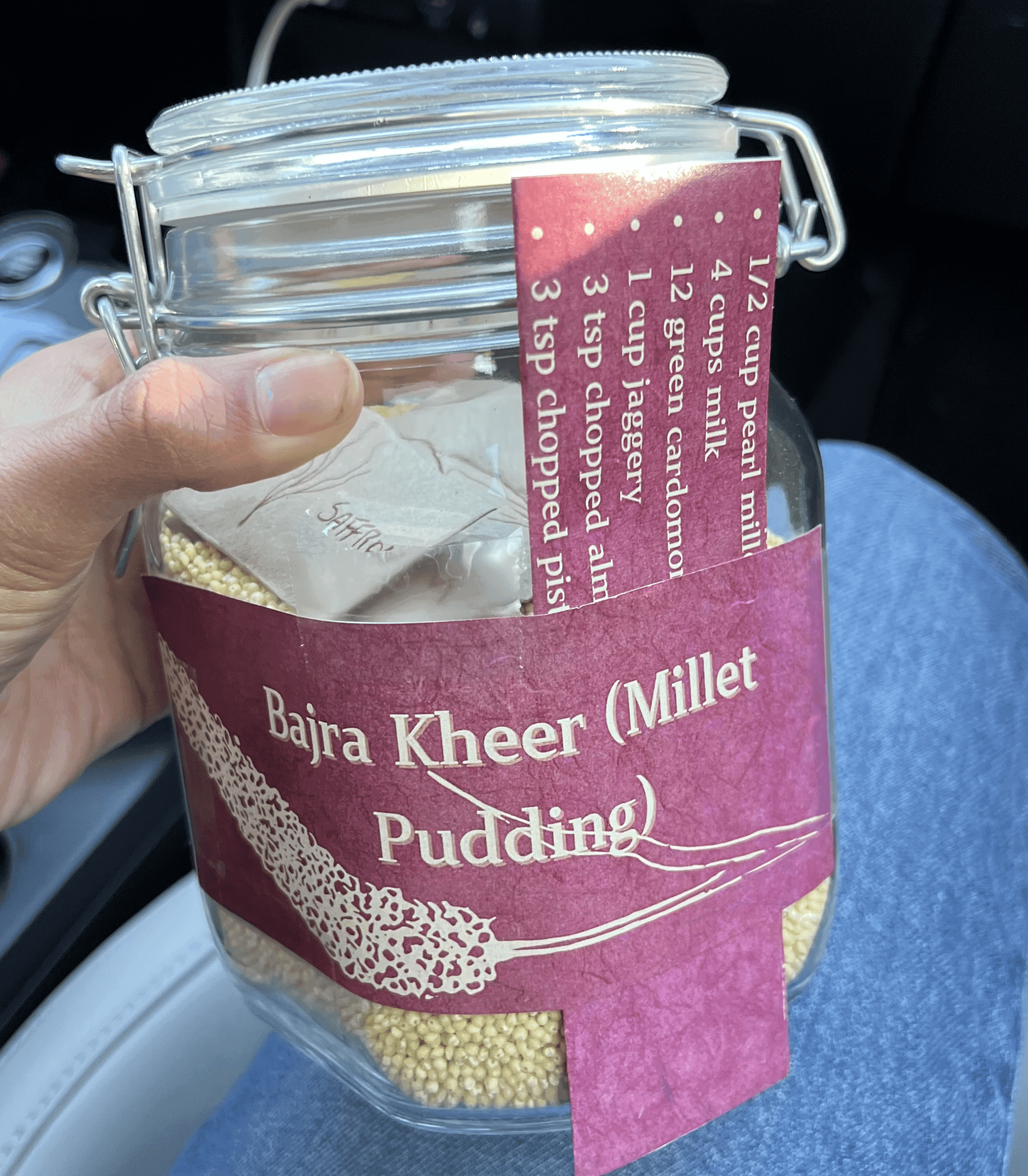
After hearing Simren’s story of learning about Bajra from her elders, Fatema was inspired to ask for her own Grandmother’s story. Bajra was a primary staple grain in both Punjab and Rajasthan before the rise of the Green Revolution in India. This connection over a shared ancestral grain is what initially launched Fatema and Simren’s artistic partnership.
In 2021 Simren also convinced her dad to build a terraced agriculture space in the rocky hillside behind their house. Now they are growing Bajra there, alongside many other Punjabi crop staples, plants native to Washington's Pacific Northwest, and other heirloom produce varieties.
Navdeep Rai
Simren's father speaks on growing his own food and how it reminds him of his history
0:00 / 0:00
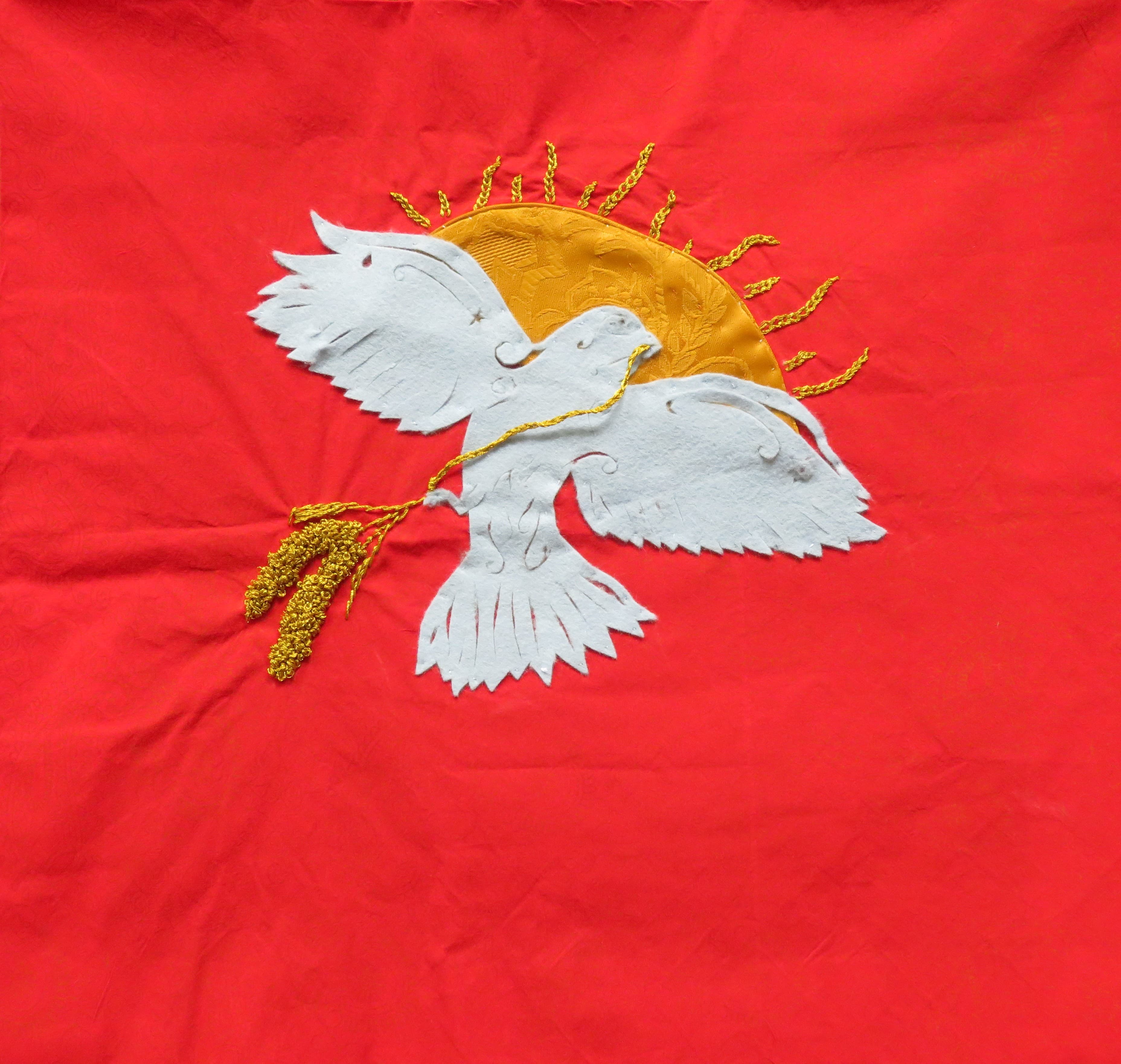
The art of this square is an iteration of the Revolutionary Grains logo. The hand-cut felt bird carries embroidered millet, towards the sun, symbolizing the possibility for alternative food systems.
“Teaching ancestral traditions to future generations also protects lands, waters, and joy, for future generations”
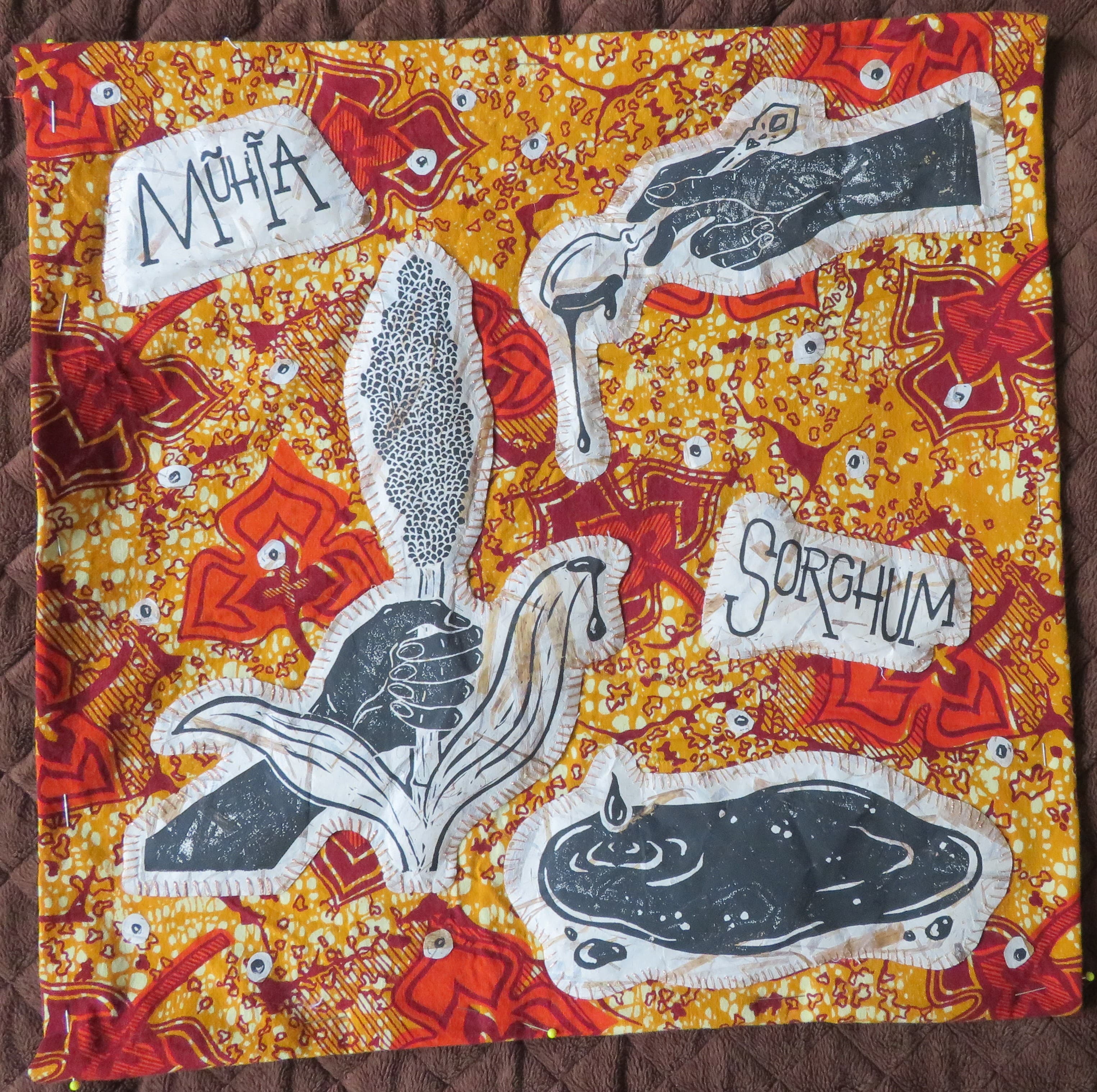
Sorghum - Elisa McGee and Mercy Kariuki-McGee
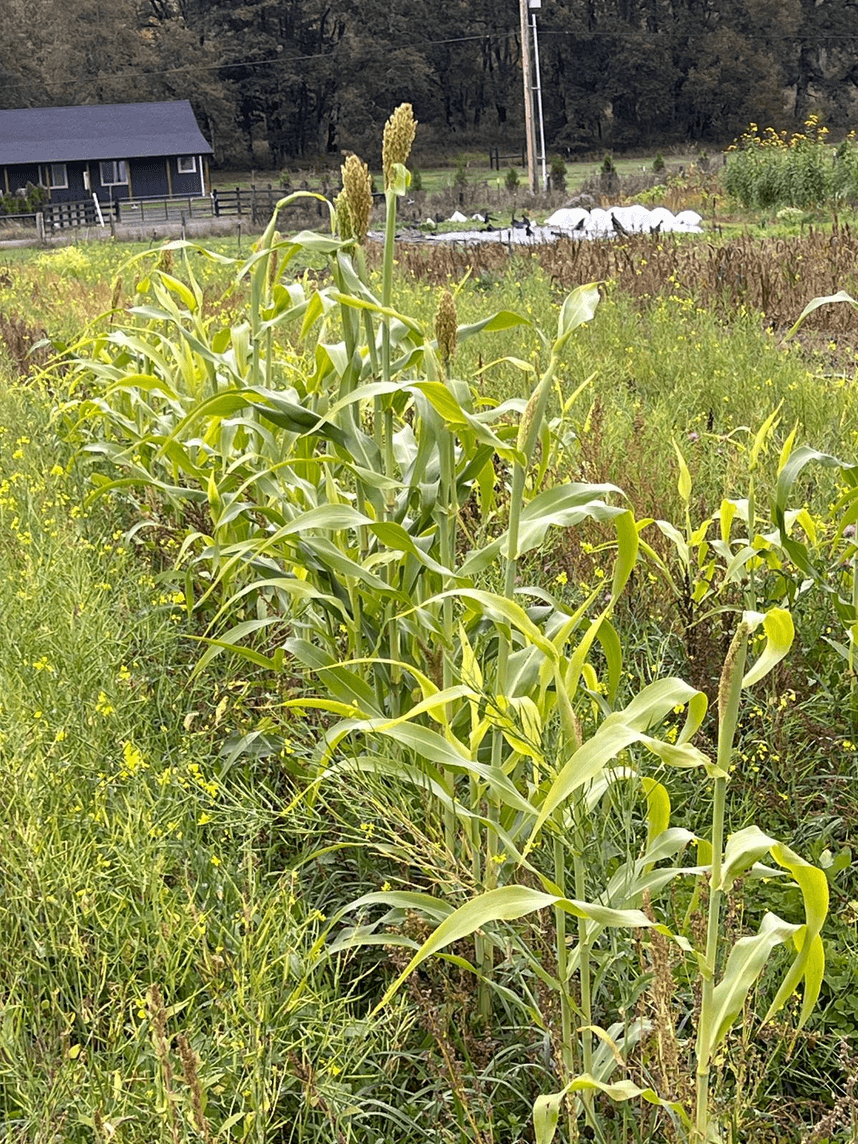
In 2021, Elisa Kariuki-McGee and her mother Mercy Kariuki began the Haki Farmers Collective, a space for black and brown farmers to come together and grow – in their own way, no strings attached. Elisa and Mercy spoke to us about their relationship to Sorghum, a staple crop from their mother country, Kenya. Mercy spoke to us of memories from her childhood, of harvesting the grain with her mother in the fields, with a constant background of her mother’s singing. Elisa spoke of their journey over the past year of attempting to grow climate-resistant forms of Sorghum on the collective’s land in Lacey, WA.
Mercy Kariuki-McGee
Mercy speaks about teaching the next generation and her mother singing while working
0:00 / 0:00
“Indigenous first foods are important cultural and environmental health indicators. A healthy food system moves beyond wheat monocultures to protect these foods”
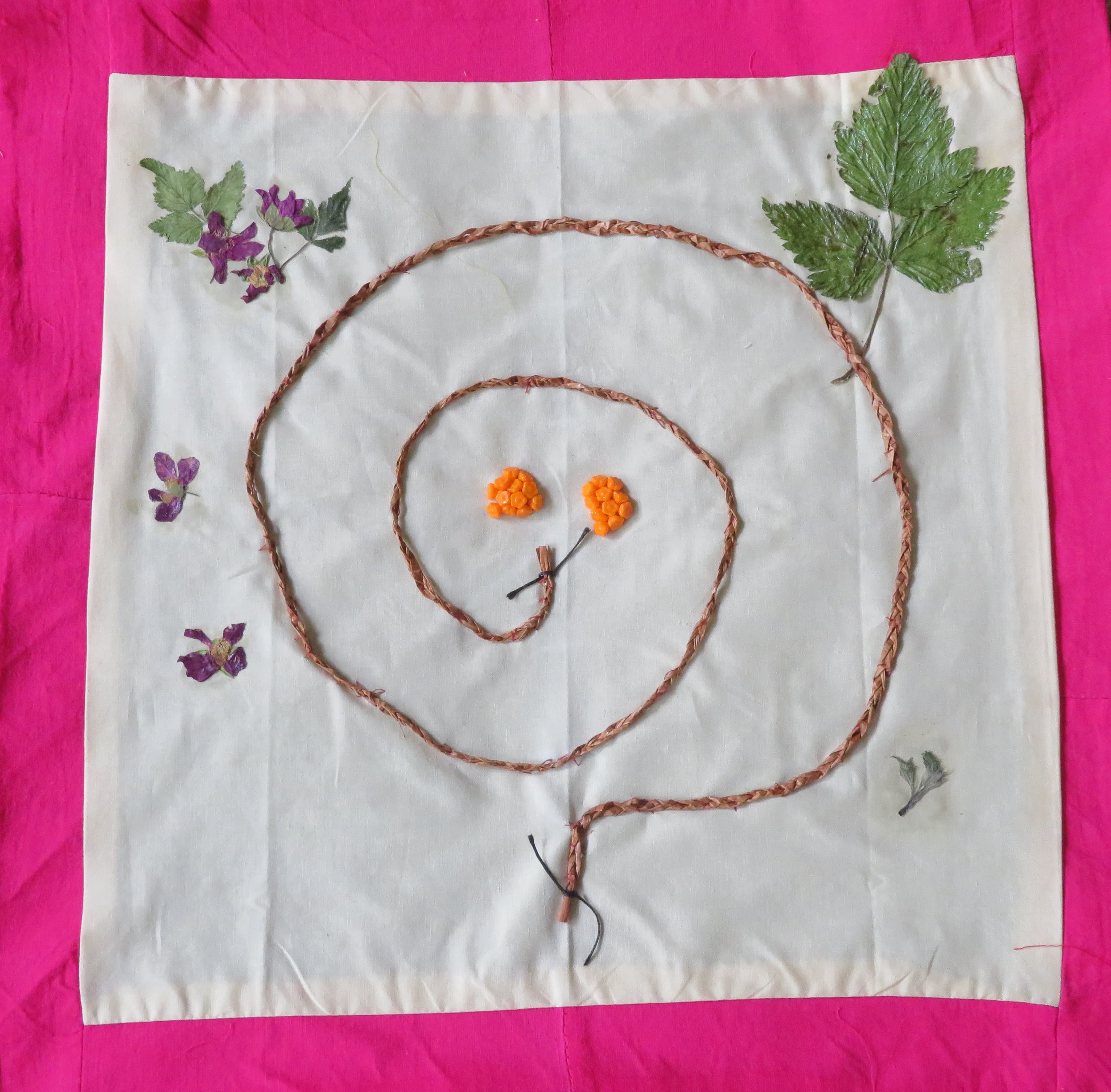
E’li’le (Salmonberry) - Lora Boome
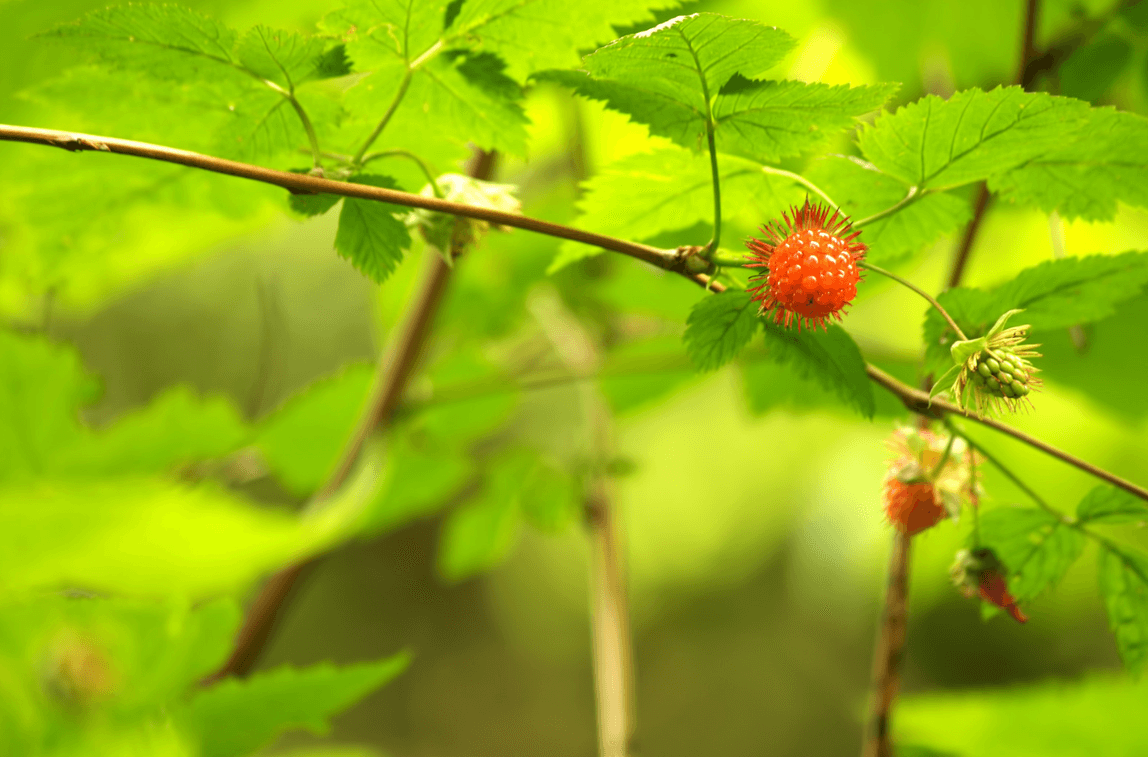
Lora Boome is the Traditional Plants and Foods Coordinator at Northwest Indian College. Lora is a member of the Lummi tribe, and spoke to us about E’li’le - Salmonberry. Salmonberry was driven out of the diets of Lora and her ancestors, by the introduction of commodity crops like wheat and U.S. government supplied food boxes. Lora spoke to us of her work in revitalizing traditional foods for the Lummi people, and of her connection with E’li’le in particular.
Lora Boome
Lora explains the personal and environmental impacts of salmonberry
0:00 / 0:00
Lora braided the central spiral from cedar harvested and willed to her by her grandmother. This special gift is surrounded by sprouts (also called bear candy), the iconic leaves (which are identified by their butterfly shape), and the brilliant pink flowers of the Salmonberry plant. Fatema and Simren harvested these from the coast of Washington, ensuring to show reciprocity to the plant by providing water to the plant. They then sewed the bright orange berry onto the square with beads.
“Not all wheat is harmful - there are climate varieties and local sources”
Confluence Wheat - Crystie Kiesler
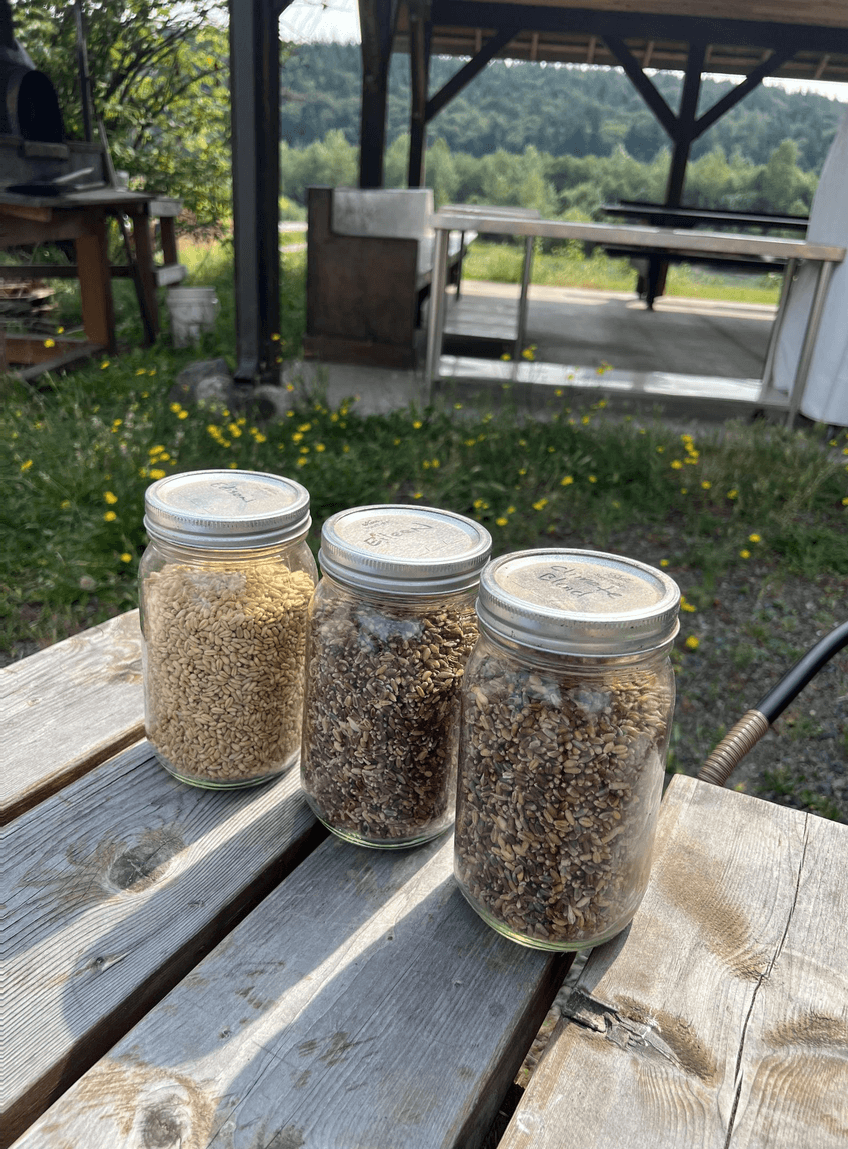
Crystie Kiesler is the founder of Chimacum Grainery. In partnership with the Washington State University Bread Lab, Chimacum Grainery is growing a climate resilient variety of wheat called Confluence (Eileen) Wheat. The grainery prioritizes social justice in their operations.
Crystie Keisler
Crystie discusses her and nature's work developing Confluence Wheat
0:00 / 0:00
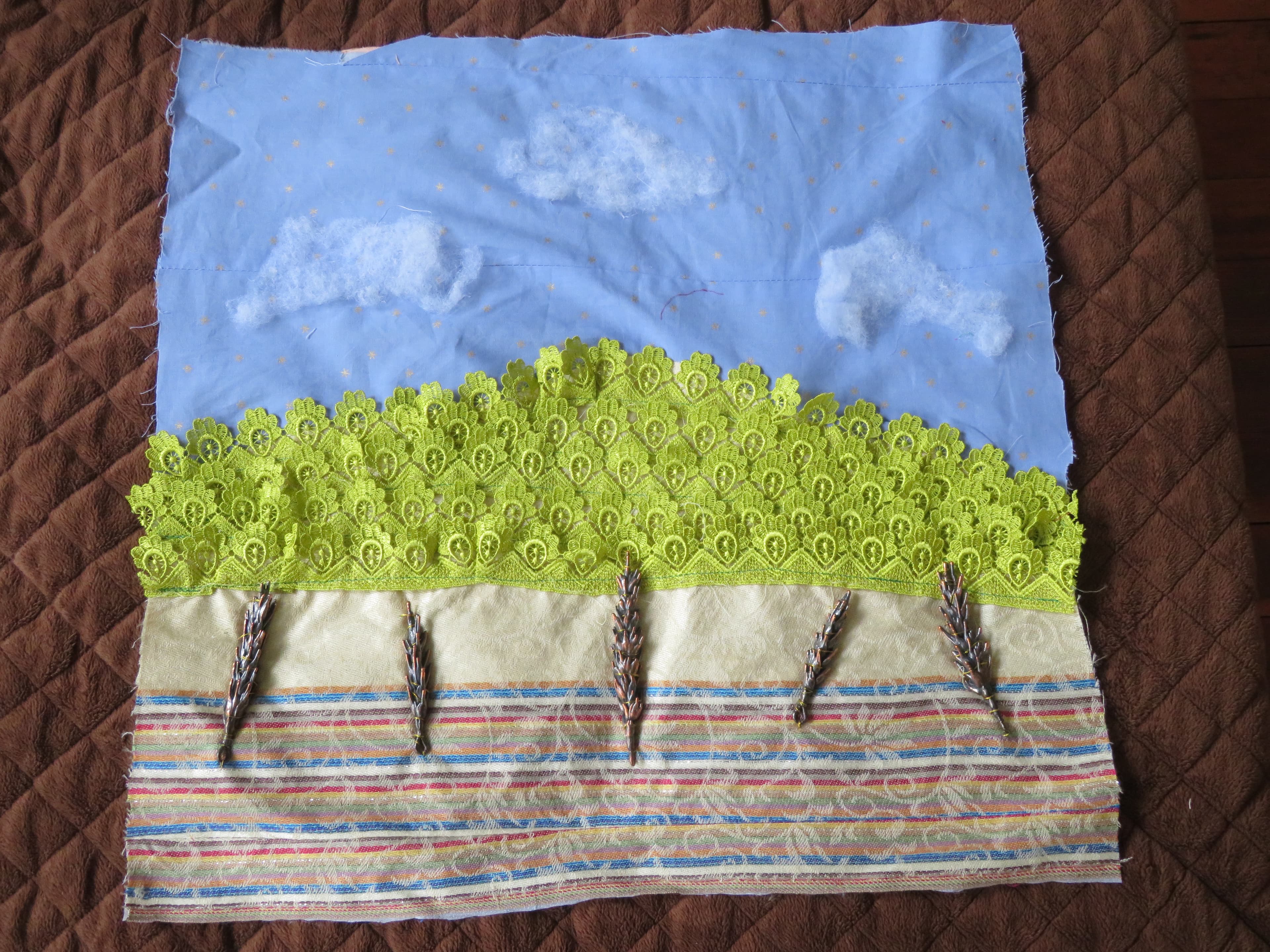
Azurite Nuray is a local Chimacum jewelry artist, who encased dried confluence wheat heads in copper, through a process called copper electroforming. Simren and Fatema designed the quilt to look like Chimacum Grainery's landscape. They sewed on colorful recycled fabric to model nutrient rich soil. They used recycled fabric trim to capture the hills that rise in the background of the farm.
“Ancient wheats can be grown regeneratively”
Emmer Wheat - Brooke and Sam Lucy
Sam Lucy
Sam explains how he and Brooke grow their farms organically
0:00 / 0:00
“If it's not growing, give it a rest”
Melissa Meyers
Melissa speaks about the narrative of artificial scarcity
0:00 / 0:00
Melissa Meyers
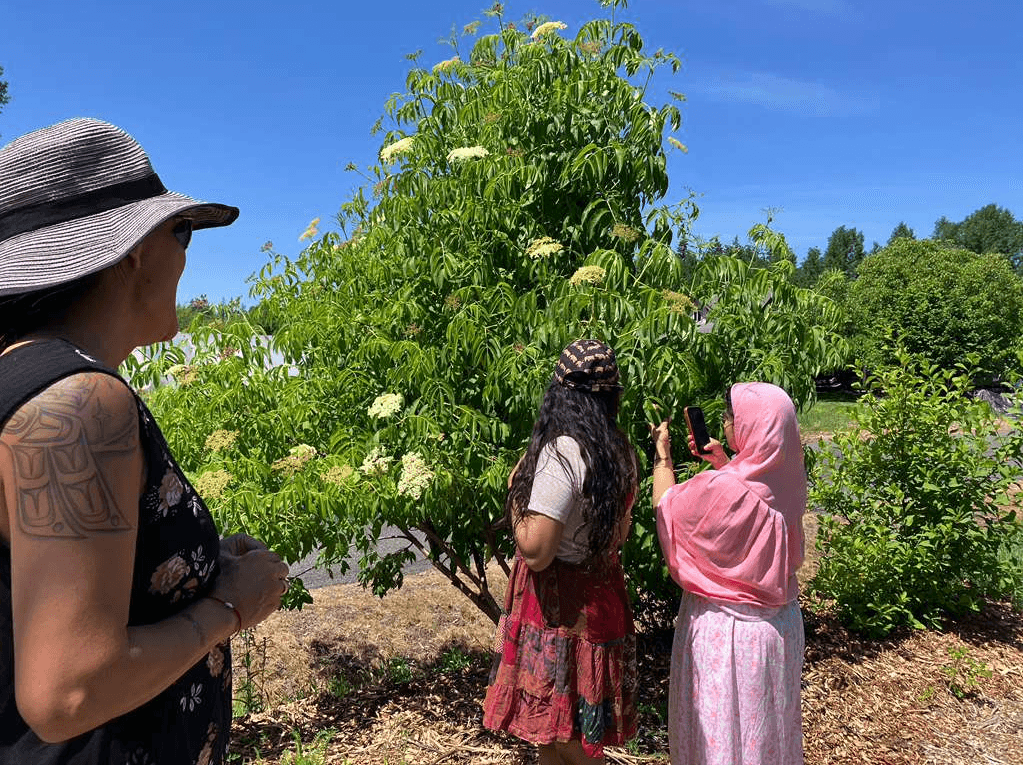
Melissa explains the importance of elderberry
0:00 / 0:00
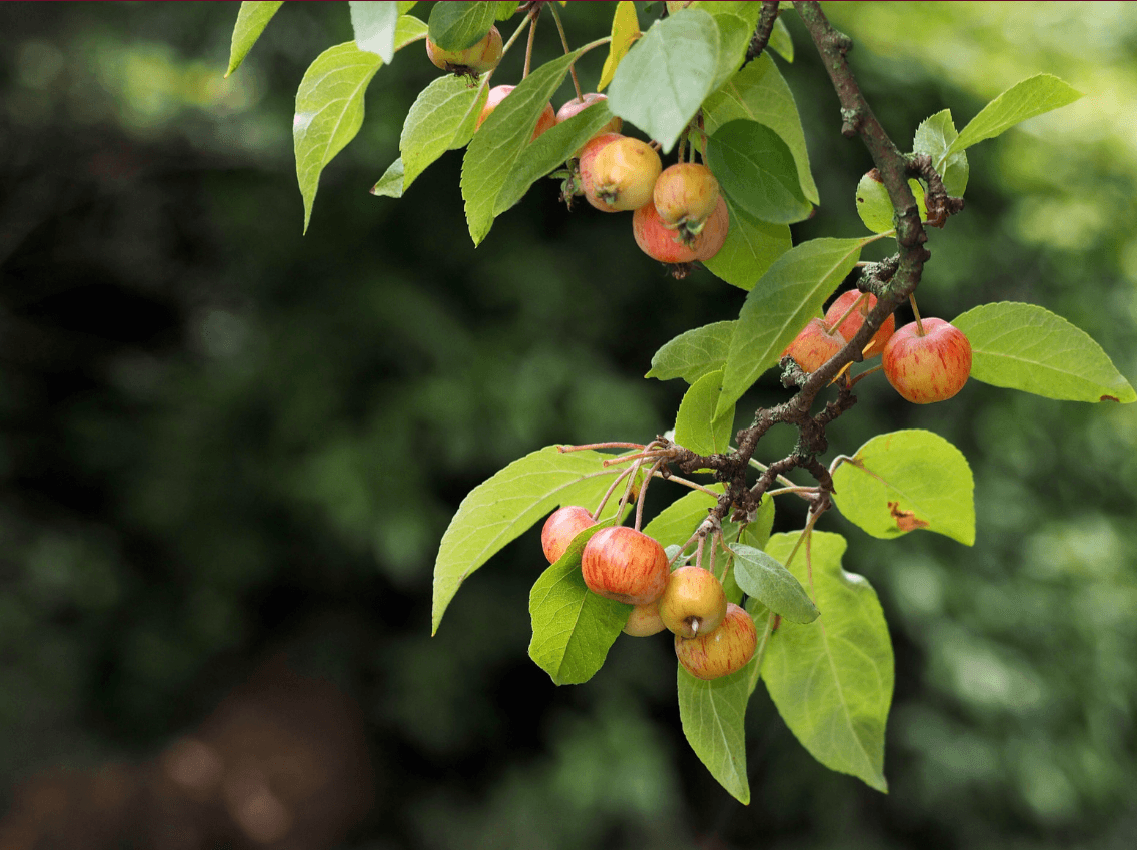
Crab Apple - Duwamish Nation